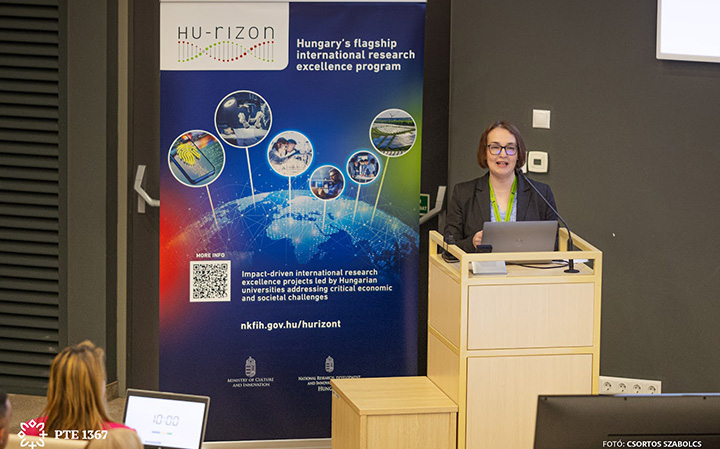

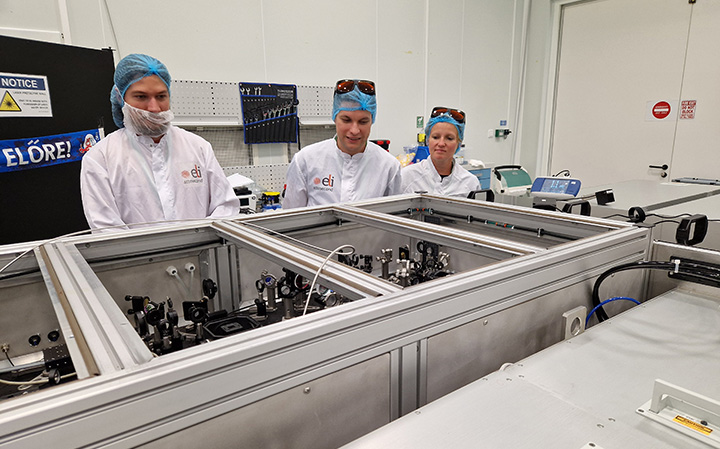
When we walk into a shop, we hardly even notice how helpfully the door opens for us – since the spread of photocells, this has become an everyday occurrence. We have also grown used to controlling everything with remote controls, which operate using infrared light. But what would the world be like if similar light-controlled “remote switches” could be built into cells? At the University of Pécs, Hungarian researchers are studying light-activated molecular switches as part of the HU-rizon Programme. The international research project, funded by the National Research, Development and Innovation Office (NRDI Office), is led by Dr. András Szilárd Lukács.

The 2020 pandemic is still vivid in all our memories. Since then, we have been closely following news about viruses and epidemics, as science warns that in today’s globalised world, new epidemics can emerge very quickly. At the University of Pécs, Hungarian researchers are working together with the finest international partners under the HU-rizon Programme to reduce the likelihood of such events.

“This year, in the third call of the HU-rizon Programme, we are once again providing a funding amount of HUF 8 billion for research proposals”, the Minister of Culture and Innovation announced at a press conference in Budapest on Tuesday.

The FOREST (European Partnership for FOrests, forestry, and the forest-based sector: REsearch and innovation for a Sustainable Transition) co-funded partnership was launched on 1 June 2026, with the aim of supporting research, development and innovation to accelerate the transition to a sustainable, circular forest-based bioeconomy.

The XPAND Program, initiated by the National Innovation Agency (NIÜ), is designed to help Hungarian startups and SMEs enter international markets, connect with global investors, and expand their business networks.