Research Council of Hungary


Pursuant to Act LXXVI of 2014 on scientific research, development and innovation, the professional content of research excellence projects to be funded from the NRDI Fund should be evaluated by the Research Council of Hungary (henceforth: KKT). KKT may involve evaluation panels in the process of formulating its funding recommendations.
The evaluation panels review the grant proposals, inviting also external reviewers to submit their assessment on the proposed research projects to the panel.
The Research Council of Hungary (KKT) was established by the amendment of Act LXXVI of 2014 on Scientific Research, Development and Innovation, which entered into force on 1 January 2024.
The KKT consists of seven members. In accordance with the provisions of the law, its president and members were proposed jointly by the Minister responsible for the coordination of science policy, the President of HUN-REN and the President of the Hungarian Academy of Sciences. The president and members of the KKT were appointed by the Minister responsible for the coordination of science policy. The appointment is for a period of 6 years and can be extended once. The secretariat duties of the KKT are performed by the National Research, Development and Innovation Office (NRDIO).
The KKT’s mission is to develop the framework conditions for the excellence-based research funding programmes and to prepare funding decision proposals. To that end, the announcement of the related calls for proposals, the funding decisions, the evaluation process and the composition of the related bodies should be based on the KKT’s proposals. All this ensures that the key decisions on excellence-based research grants are always made based on the proposal of a decision-preparatory body consisting of researchers.
The inaugural meeting took place on 13 February 2024, when the President and members of the KKT took up their appointment and began to draw up the KKT’s scope of work.
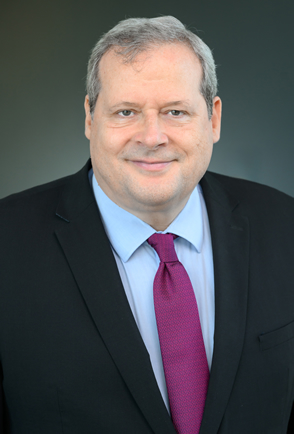
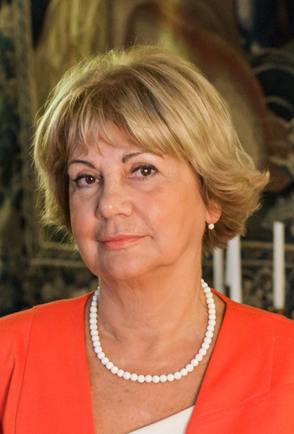
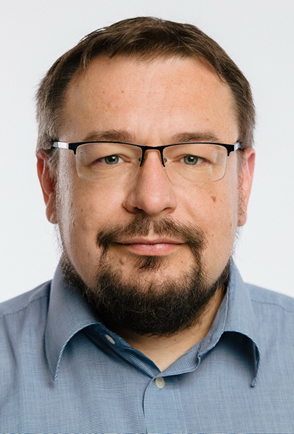
The KKT started its operation with the following renowned researchers: Ferenc Krausz (President), Petra Aczél, István Greiner, Éva Kondorosi, András Perczel, Gergely Röst and Gábor Stépán.
For the initial meetings discussing the renewal concept of the of the funding system, the President of the Hungarian Academy of Sciences and the HUN-REN Hungarian Research Network were also invited, for an increased representation of the research community needs.
In year 2024, the KKT had a total of 7 meetings and adopted 10 resolutions.
The KKT's primary task was to create an excellence-based funding programmes system for individual research, which was facilitated in the form of the National Research Excellence Program (NKKP). The NKKP was announced in 2024 with four sub-programmes: Excellence, Advanced, Starting, ANN/SNN, and was built on the experiences of the National Scientific Research Fund (OTKA) during several previous decades. The NKKP provided an increased funding: the programme started in 2024 with a budget of HUF 19 billion, as opposed of the OTKA’s budget HUF 13.5 billion in the previous year and the level of grants available for individual research projects was also significantly increased. Key factors of the professional concept included supporting internationally competitive projects, stimulating participation in international calls, strengthening research group operations, and adapting the two-round selection system in line with international patterns (i.e. ERC). The NRDIO, as the coordinator of the programme, held an information day for applicants on 29 May 2024.
Beyond that, the Ministry as a funding authority also requested the KKT's expertise during the decision-making process for two additional research programmes, namely the Research Grant Hungary and the HU-rizon Programme. Although the KKT was not involved directly in designing these schemes, the funding decisions were made with due consideration of the KKT’s position, having reviewed the applications and professional evaluations.
As from 1 October 2024, the KKT is chaired by Péter Domokos who, based on the first year’s experiences of the NKKP, continued the consultations with representatives of the research community, including the heads of the scientific departments of the Hungarian Academy of Sciences, the Academy of Young Researchers (FKA), representatives of research institutes and higher education institutions, as well as with representative organizations of certain disciplines (e.g. sociology, earth sciences, regional sciences). During such discussions, the position paper on the new funding system prepared by the Hungarian Academy of Sciences was discussed with the participation of the KKT’s President and the Secretary as well as the NRDIO’s Vice President for Science and International Affairs. Reflecting on the comments made, the KKT provided information on the changes planned for the next call for proposals in 2025. Moreover, the KKT requested recommendation from the scientific departments of the Hungarian Academy of Sciences for the new Hungarian and foreign members of the evaluation boards.
The scope of authority of the Research Council of Hungary (KKT) has been significantly expanded with the amendment of Act LXXVI of 2014 on Scientific Research, Development and Innovation, which entered into force on 1 January 2025. From then on, the KKT’s activity covers not only the excellence-based individual research grants, but the entire Research Sub-fund within the National Research, Development and Innovation Fund (NKFIA), including funding decisions.
In the 2025 call for proposals of the National Research Excellence Programme (NKKP), the KKT made several modifications based on the previous year's experiences and continuous discussions with the research community. NKKP was added with a Highlight sub-programme, while two programmes were removed from the KKT’s portfolio: the HU-rizon Programme was moved to the Innovation Sub-fund and the Research Grant Hungary was transferred to the scope of activities of the Frontiers Foundation. The NKKP budget increased from the previous HUF 19 billion to HUF 40 billion. This budget increase allowed the success rate to approach the optimal 25%. The NRDIO, as the coordinator of the programme, held an information day for applicants on 4 March 2025.
Pursuant to the amendment of the law, beside the NKKP, the KKT is also in charge for the University Research Scholarship Programme (EKÖP) with a total budget of HUF 6 billion in 2025.
In year 2025, the KKT had a total of 6 meetings and adopted 13 resolutions.
As from September 2025, the Cooperative Doctoral Council continues its activity as a special body within the KKT, with unchanged responsibilities.
The KKT represented by its President, participated in the working group for the renewal of the doctoral education in Hungary. To that end, it had regular consultations with representatives of the Ministry of Culture and Innovation, the National Research, Development and Innovation Office, the Hungarian Accreditation Committee, the Hungarian Doctoral Council, the Association of Hungarian PhD and DLA Candidates, and the National Conference of Student Governments.
In 2025, the KKT remained active to consult with and keep informed the research community. In this context, an interview with the KKT’s President was published on the website of the Hungarian Academy of Sciences on 20 November 2025, explaining the objectives of the KKT and the new funding system.
The vision of the KKT on an efficient and competitive research system in Hungary implies adequate separation of institutional funding and project funding, the latter supported by a solid and predictable funding system (i.e. NKKP) and a conscious model for researcher's career pathways (i.e. a renewed doctoral education system).
President of the Research Council of Hungary
Research Professor, member of the Hungarian Academy of Sciences (HAS) and Academia Europaea